| Direct answer
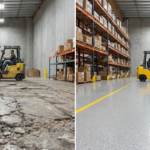
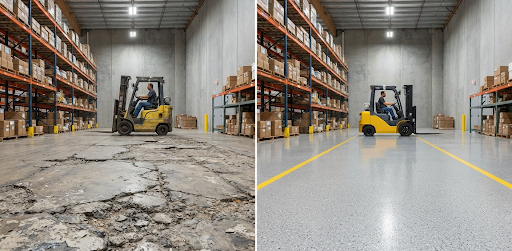
An industrial floor typically needs maintenance when the slab is structurally sound but showing early, minor hairline cracks, small areas of spalling, or localized coating wear that can be addressed proactively before they grow. It needs repair when damage is surface-level but more established, such as dusting, isolated coating failure, or minor unevenness over a sound slab. It leans toward replacement when damage is widespread or structural: deep or moving cracks, extensive delamination, significant unevenness, moisture, and substrate failure. The deciding factors are how deep the problem goes, how much of the floor is affected, and its impact on safety and operations. |
What Are the Signs an Industrial Floor Needs Routine Maintenance?
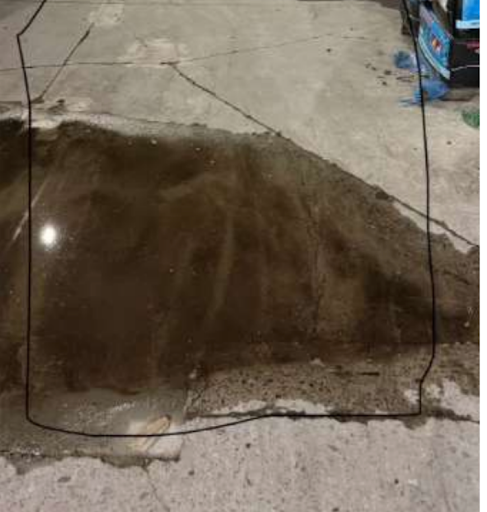
Before a floor shows real damage, proactive maintenance helps preserve its condition and extend its service life. These are early-stage, low-severity signs that a sound floor simply needs scheduled care rather than a repair project:
- Hairline or minor static cracks
- Isolated spalling or pitting
- Surface stains from paint, food, oil, or other contaminants
- Small, cosmetic damaged areas
- Localized coating wear in traffic lanes
- Dulling or reduced sheen on a protective topcoat
- Early signs of wear in forklift aisles or turning areas
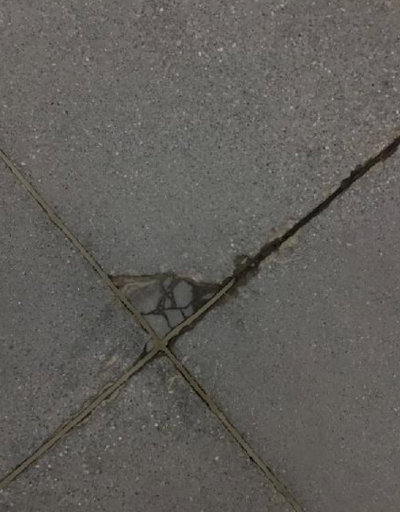
Addressing these issues early is typically the most cost-effective way to protect the flooring, allowing them to be incorporated into a preventive maintenance plan rather than requiring reactive repairs later.
What Are the Signs an Industrial Floor Needs Repair?
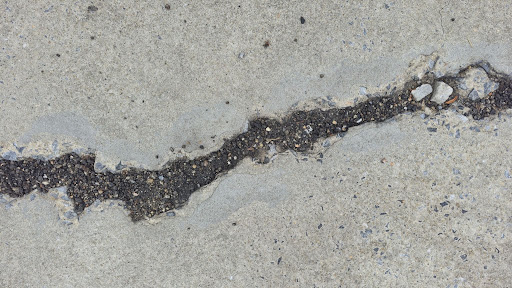
Some problems go beyond routine maintenance but are still localized and don’t affect the structural integrity of the slab. Common examples include:
- Surface dusting
- Peeling or blistering coating in limited areas
- Minor surface unevenness
When the underlying concrete remains sound, these problems can often be addressed without replacing the entire floor. Depending on the condition, solutions may include crack and joint repair, concrete patching, resurfacing, floor leveling, densification, dustproofing, or recoating. Industrial Floor Systems provides services including floor levelling and concrete hardening and dustproofing to restore and improve industrial concrete floors.
What Are the Signs an Industrial Floor May Need Major Resurfacing or Replacement?
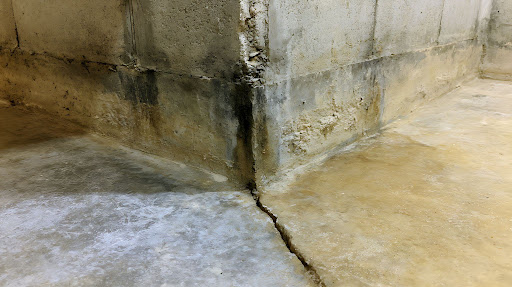
More extensive intervention may be necessary when the damage affects the underlying concrete or continues to return after previous repairs. Warning signs include:
- Wide or actively moving cracks
- Cracks that repeatedly reopen after maintenance or repair
- Extensive delamination
- Widespread spalling
- Crumbling or friable concrete
- Significant settlement or sunken areas
- Major elevation differences
- Persistent moisture problems
- Extensive coating failure
- Repeated repairs that fail
- Suspected structural or subgrade problems
When the underlying slab or substrate has significant problems, resurfacing alone may not provide a lasting solution. The appropriate response depends on the cause and severity of the failure. In some cases, the floor can be repaired or resurfaced. In others, more extensive removal and replacement may be required.
Repair, Resurface, Recoat or Replace: What’s the Difference?
Choosing the right path isn’t always a simple either-or decision. Industrial floors can require different levels of intervention depending on the problem.
| Option | When It Makes Sense |
| Maintenance | Floor is structurally sound with early, minor wear such as hairline cracks, isolated spalling, pitting and holes; addressed proactively on a scheduled basis |
| Repair | Damage is localized and the underlying concrete remains sound |
| Resurface | A larger surface area needs restoration while the underlying slab can remain |
| Recoat | The existing coating is worn or damaged but the concrete substrate is sound |
| Replace | Damage is widespread, structural, or the existing system has repeatedly failed |
The important question is not simply “How damaged does the floor look?” It is “What is causing the damage, and how far does that problem extend?”
Maintenance, Repair or Replace? A Symptom-by-Symptom Guide
Use this diagnostic table to interpret common symptoms. It indicates the likely cause, the typical intervention, and flags when a qualified professional should evaluate the floor.
| Symptom | Likely Cause | Typical Intervention |
| Hairline cracks | Shrinkage, minor stress | Fill and seal (maintenance) |
| Isolated spalling / pitting | Wear, minor impact | Spot patch (maintenance) |
| Localized coating wear | Traffic wear, aging topcoat | Scheduled recoat (maintenance) |
| Surface dusting | Weak or unsealed surface | Densify and seal (repair) |
| Peeling / blistering coating (limited area) | Bond or moisture failure | Recoat after prep (repair) |
| Minor surface unevenness | Localized wear or settlement | Leveling (repair) |
| Wide / moving cracks | Structural movement | Have a contractor evaluate before deciding |
| Widespread delamination | Substrate or moisture failure | Likely replacement – contractor evaluation |
| Uneven / sunken slab | Subgrade or settlement issue | Have a contractor evaluate before deciding |
| Deep cracks with movement | Suspected slab failure | Evaluation by a qualified professional required |
How widespread is the damage?
The extent and distribution of damage are important parts of the repair-or-replace decision. A few isolated defects in an otherwise sound floor may be practical to repair. A floor with cracking, spalling, or coating failure across large areas may require a more comprehensive solution. Damage should be mapped across the facility rather than evaluated from one problem area alone. Pay particular attention to whether damage clusters around:
- Forklift aisles
- Turning and braking areas
- Loading docks
- Doorways
- Expansion or control joints
- Wet areas
- Battery charging areas
- High-traffic production zones
If the same type of damage appears repeatedly across the facility, it may indicate a common underlying cause rather than a collection of unrelated surface defects.
Why do coatings peel, bubble or delaminate?
Coating failure usually traces back to bond problems: inadequate surface preparation, contamination, or moisture moving up through the slab. Because moisture is such a frequent culprit — and, per CTLGroup, moisture-related flooring failures cost North American property owners an estimated $2.4 billion a year — identifying the root cause before recoating is essential. Recoating over an unresolved moisture or contamination issue simply repeats the failure. Correct surface preparation and, where needed, floor removal set up a lasting repair.
What Does an Industrial Floor Assessment Involve?
When a flooring contractor is called in to quote a job, the floor is evaluated to determine both what is wrong and why it is happening. Depending on the floor and the type of damage, this evaluation may consider:
- Visible damage
Cracks, spalling, delamination, dusting, coating failure, and uneven areas are documented and mapped.
- Substrate condition
The condition of the concrete is evaluated to determine whether the underlying slab is suitable for repair or a new flooring system.
- Moisture
Moisture conditions may be investigated where coating failure, blistering, or adhesion problems are present.
- Contamination
Oil, grease, chemicals and other contaminants can affect the bond of a new flooring system.
- Movement and joints
Cracks and joints are assessed to determine whether movement is contributing to recurring damage.
- Operating conditions
Forklift traffic, equipment loads, chemicals, washdown, temperature, and cleaning methods all influence the appropriate flooring solution.
- Previous repairs
Repeated failure in previously repaired areas can provide important clues about the underlying problem.
The goal is to select the least disruptive solution that provides an appropriate long-term result, rather than automatically recommending either repair or replacement.
A simple decision framework
- Identify the visible symptom (crack, spall, dusting, delamination, unevenness).
- Determine whether it’s early-stage (maintenance), surface-level (repair), or substrate-related (replacement).
- Measure how widespread the damage is across the floor.
- Investigate moisture, movement, contamination, and traffic history.
- Assess the safety and operational impact.
- Compare repair, resurfacing, recoating, and replacement.
- Weigh downtime and long-term value, then request a quote from a qualified contractor.
| Safety note
Do not rely on a visual check alone to rule out structural problems. Widespread cracking, movement, deep spalling, recurring delamination, major elevation differences, or suspected slab failure should be evaluated by a qualified professional before you decide on a course of action. |
Industrial Floor Inspection Checklist
Before requesting an quote, document as much of the following as possible:
- Photograph cracks, spalling, dusting and coating failures.
- Map where the damage occurs.
- Note whether damage is concentrated around aisles, joints, doorways or wet areas.
- Record whether cracks appear stable or moving.
- Look for hollow-sounding or delaminated areas.
- Note elevation differences or sunken sections.
- Document forklift and equipment traffic.
- Identify chemicals, oils, and cleaning products used in the area.
- Note any previous repairs or coating installations.
- Estimate the percentage of floor area affected.
- Record any moisture concerns or previous moisture testing.
- Document operational and downtime requirements.
The more information available, the easier it is to determine the appropriate flooring strategy and prepare an accurate quote.
Key takeaways
- Routine maintenance keeps a structurally sound floor performing well and helps prevent bigger repair needs down the line.
- Surface-level, localized damage usually means repair; widespread or structural damage points to replacement.
- Cracks that move, recur, or run deep signal a substrate problem, not just a surface one.
- Moisture, contamination and traffic history all influence whether a repair or maintenance fix will last.
- Widespread cracking, movement, or suspected slab failure warrants evaluation by a qualified flooring professional.
Frequently asked questions
| How often should an industrial floor be maintained?
This depends on traffic levels and the flooring system, but many facilities schedule inspections and topcoat maintenance annually, with spot repairs handled as soon as early wear is noticed. |
| Can cracked industrial concrete be repaired?
Many cracks can. Static hairline cracks are often addressed through routine maintenance, while wider or moderate cracks are typically filled and sealed as a repair. Cracks that are wide, active, or recurring may indicate movement and should be assessed before choosing a fix. |
| When should an epoxy floor be recoated?
When the topcoat is worn, dull, or thin in traffic lanes but the underlying floor is sound — often part of routine maintenance. If the coating is delaminating over large areas, the cause must be resolved first as a repair or replacement. |
| Why is my industrial floor peeling?
Usually because of a bond failure from poor surface preparation, contamination, or slab moisture. Correct preparation and identifying the root cause are essential before recoating. |
| Does widespread spalling mean I need a new floor?
Not always, but extensive spalling suggests a deeper durability or moisture issue. Having a qualified flooring contractor evaluate the floor will determine whether maintenance, resurfacing, or replacement is the better long-term choice. |
| Not sure whether to repair or replace?
An industrial floor generally benefits from maintenance when damage is early-stage and the slab is sound, needs repair when damage is surface-level and localized, and needs replacement when it is widespread or structural — deep or moving cracks, extensive delamination, or substrate and moisture failure. The decision hinges on how deep the damage goes, how much of the floor is affected, and its impact on safety and operations. |
If you’re unsure whether an industrial floor should be maintained, repaired, resurfaced, or replaced, the best next step is to request a quote. When you do, Industrial Floor Systems can assess the condition of the floor as part of the quoting process, identify the root cause of the damage, and recommend the most cost-effective long-term solution.