Direct answer For heavy forklift traffic, high-build epoxy, aggregate-filled epoxy, or epoxy mortar systems are commonly considered. Epoxy mortar may be appropriate for very heavy loads and impact, while urethane cement may be better for thermal shock, aggressive chemicals, or frequent washdowns. The final choice should be based on slab condition, forklift weight, wheel type, traffic frequency, chemical exposure, and available downtime. |
Key takeaways
- Standard thin epoxy may wear prematurely in turning and braking zones, while heavy traffic may require a high-build, aggregate-filled, or mortar system.
- A durable flooring system starts with a properly evaluated and prepared concrete slab. Learn more about Industrial Floor Systems’ epoxy flooring and surface preparation services.
- Wheel type, chemicals, moisture, and downtime all influence the right specification.
- There is no single “best” product; the best system is matched to your facility’s conditions.
Is standard epoxy enough for heavy forklifts?
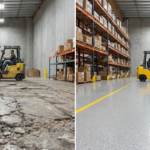
Often, no. Thin roller-applied epoxy protects and seals a floor, but hard forklift wheels concentrate load into small contact points, and turning imposes shear that can wear or chip a thin film over time. For frequent heavy forklift traffic, a thicker, reinforced system carries the load more effectively. The starting point is always a sound, well-prepared slab; see the Industrial Floor Systems epoxy flooring and surface preparation services.
Why Is Forklift Traffic So Hard on Flooring?
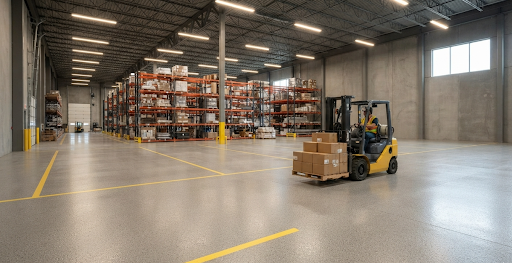
Forklift traffic places different stresses on a floor than ordinary pedestrian traffic. A forklift may carry a heavy load while concentrating that weight through relatively small wheel contact areas. Repeated acceleration, braking, and turning create additional horizontal forces at the floor surface. Forklift environments can also involve dropped pallets, impacts, hard wheels, oil contamination, and frequent cleaning.
The most demanding areas are often:
- Forklift turning zones
- Braking areas
- Aisle intersections
- Loading and unloading areas
- Dock approaches
- Pick and staging areas
- Battery charging areas
- Areas where pallets are frequently dropped
This is why a floor that performs well under ordinary foot traffic may wear prematurely when subjected to continuous forklift operation.
Which flooring systems are suitable for forklift traffic?
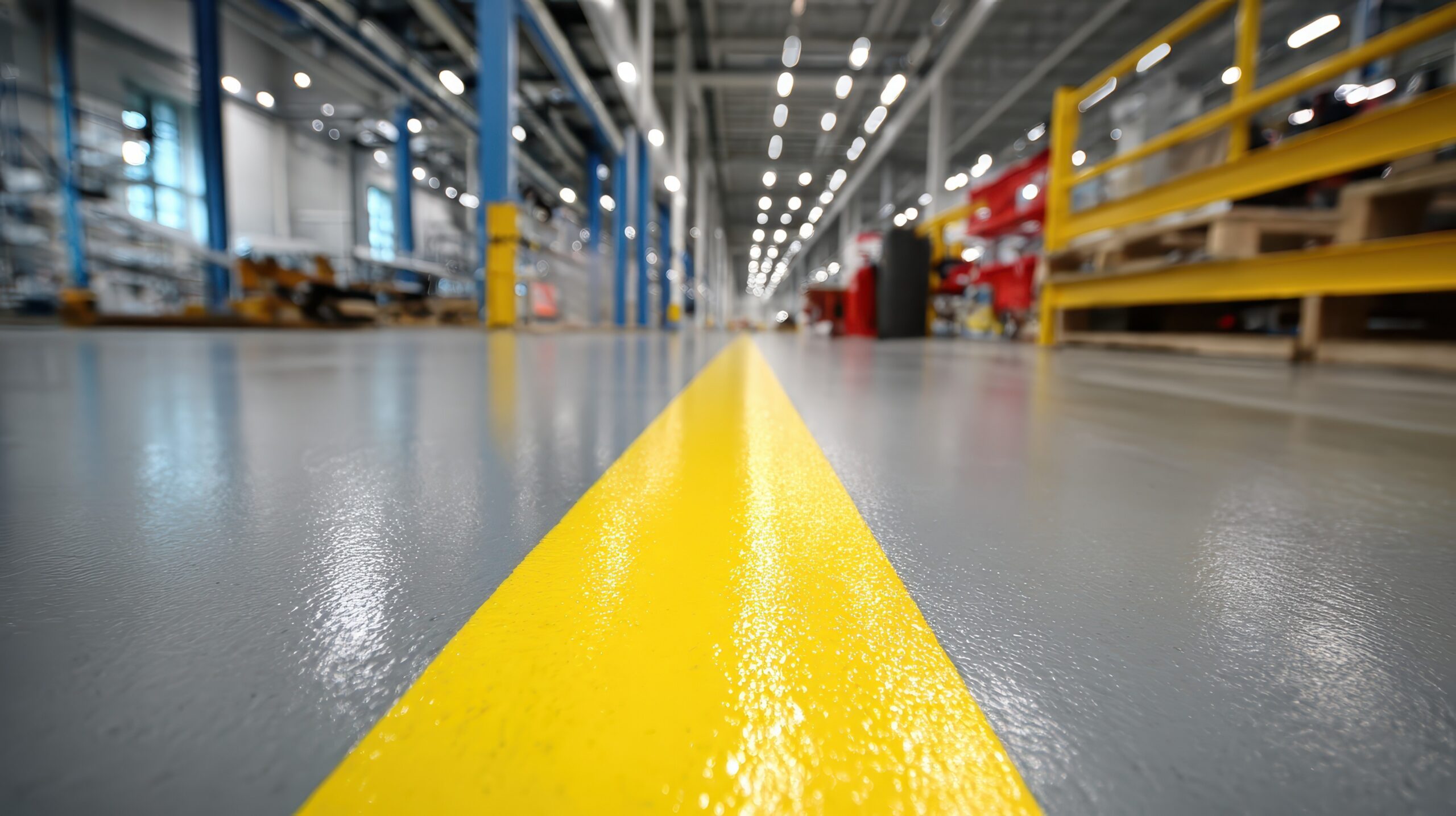
The table below compares the systems most often specified for forklift environments. Use it to shortlist candidates, then confirm with a specialist.
| Flooring system | Best Suited to | Key advantage |
| High-build epoxy | Regular to heavy forklift traffic on a sound slab | Greater thickness and abrasion resistance than thin coatings |
| Aggregate-filled epoxy | Heavy traffic requiring additional toughness and traction | Reinforcement, durability and slip-resistance options |
| Epoxy mortar | Very heavy loads, impact and demanding industrial areas | Greater thickness and compressive strength |
| Polyaspartic topcoat | Projects where rapid return to service is important | Fast cure and wear protection, depending on formulation |
| Polyurethane topcoat | Applications requiring additional wear, chemical or UV performance | Protective top layer, depending on formulation |
| Urethane cement | Thermal shock, aggressive washdown and demanding chemical environments | Strong resistance to thermal and chemical stresses |
These are starting points rather than universal specifications. The correct system should be selected after evaluating the concrete slab and operating conditions.
Why do turning and braking zones fail first?
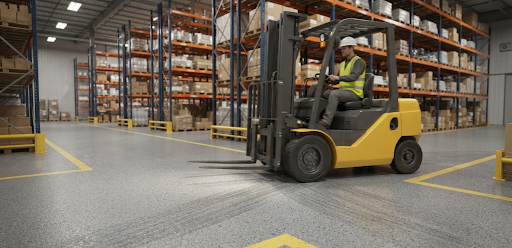
Forklifts do the most damage where they change direction. Turning creates twisting shear at the wheel contact point, and braking adds sudden horizontal force. These zones — aisle intersections, dock approaches and pick faces — wear faster than straight runs. Depending on the floor assessment, a heavier-duty system or enhanced specification may be recommended for high-stress zones rather than applying the same specification throughout the facility.
How much does coating thickness matter?
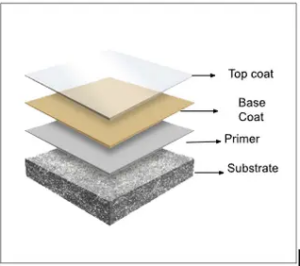
Thickness helps, but it is not the whole story. Bond strength, the compressive strength of the system, aggregate reinforcement and, above all, surface preparation determine how a floor holds up. Even a thick coating may fail prematurely when installed over a poorly prepared or moisture-affected slab. Thickness should be specified to match load and impact, not maximized for its own sake.
How do wheels, chemicals and moisture change the choice?
Forklift environments often involve more than vehicle traffic. The surrounding operating conditions can change the flooring specification.
1. Chemicals
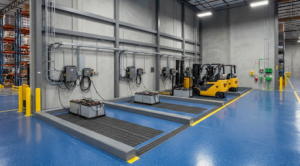
Battery charging areas may involve battery acid or other chemicals. Warehouses and plants may also have oils, fuels, cleaning chemicals, or manufacturing substances on the floor. The flooring system should be selected according to the actual chemicals, concentrations, temperatures, and exposure conditions.
2. Moisture
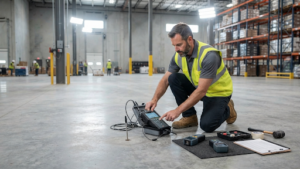
Moisture moving through a concrete slab can interfere with coating adhesion and contribute to blistering or delamination. Moisture testing should therefore be considered before installing an epoxy system.
 3. Thermal exposure
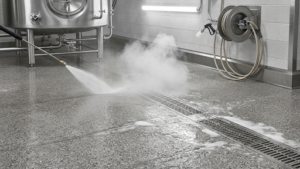
Frequent exposure to hot water, steam, thermal cycling, or aggressive washdown can place additional stress on a conventional epoxy system. In these environments, a urethane cement another or appropriately specified resinous system may be worth considering.
4. Cleaning
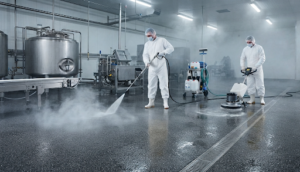
The cleaning process also matters. Frequent washdown, aggressive cleaning chemicals, or high-temperature cleaning can influence the appropriate flooring system.
How long before forklifts can return to service?
Return-to-service time depends on the flooring system, coating thickness, site conditions, and manufacturer requirements. Some epoxy systems require a longer curing period, while fast-curing options may help reduce downtime.
Industrial Floor Systems offers off-hours, overnight, and scheduled-shutdown installation. Contact our floor coatings team to discuss the installation and curing schedule for your facility.
Which Flooring System Is Right for Your Forklift Environment?
| Facility condition | Potential starting point |
| Moderate forklift traffic | High-build epoxy |
| Heavy daily forklift traffic | High-build or aggregate-filled epoxy |
| Very heavy loads and impact | Epoxy mortar |
| Hard polyurethane wheels | Heavier-duty reinforced system |
| Steel wheels | Specialized heavy-duty system |
| Frequent washdown | Urethane cement may be appropriate |
| Thermal shock | Urethane cement |
| Aggressive chemical exposure | Chemically resistant resinous system |
| Limited installation window | Fast-cure system such as polyaspartic may be considered |
| Mixed traffic zones | Different specifications may be appropriate by zone |
These are starting points, not universal specifications.
The final system should be selected based on the concrete slab, forklift loads, wheel type, traffic frequency, chemical exposure, moisture, temperature, and installation requirements.
Frequently asked questions
How thick should epoxy be for forklift traffic? There is no single figure; heavy forklift areas generally use high-build or mortar systems that are considerably thicker than a standard coating. The correct thickness is set by load, impact, and wheel type after a site assessment. |
Can forklifts damage an epoxy floor? Yes. Thin coatings may wear or become damaged in turning and braking zones, particularly where forklifts have hard wheels, or loads are frequently dropped. |
Is epoxy mortar better than standard epoxy for heavy equipment? For very heavy loads and impact, epoxy mortar offers greater thickness and compressive strength. For lighter forklift use, a high-build system may be sufficient and more economical. |
Can worn forklift aisles be repaired without recoating the whole floor? Often yes. Damaged aisles can be prepared and recoated as a zone, which is why heavier systems are frequently applied only where forklift stress is highest. |
Does thicker epoxy always mean better forklift performance? No. Thickness matters, but performance also depends on surface preparation, bond strength, concrete condition, and the flooring system design. The best floor is the one engineered for your facility’s needs, not necessarily the thickest. |
How long does epoxy flooring last under forklift traffic? It depends on traffic levels, floor condition, wheel type, maintenance, and installation quality. A properly designed heavy-duty industrial system will typically last much longer than a standard coating used in demanding environments. |
Specify the right flooring system for your facility Heavy forklift traffic requires more than simply choosing the thickest coating. The concrete condition, forklift loads, wheel type, traffic patterns, chemicals, cleaning processes, and available downtime should all be evaluated. |
Industrial Floor Systems has installed flooring systems for warehouses, manufacturing plants, and commercial and industrial facilities across Canada for more than 20 years.
Tell our team about your facility, forklift traffic, wheel types, and operating conditions. We can assess your requirements and recommend an appropriate flooring system. Request a free quote today.