| Direct answer
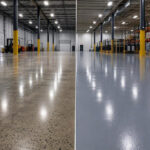
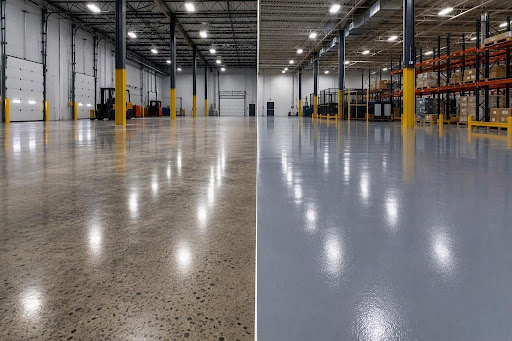
The main difference is how each floor is built. Polished concrete refines the existing slab itself, using mechanical grinding and a chemical densifier to create a hard, low-dust surface. Epoxy flooring adds a separate resin coating bonded on top of the concrete. Polished concrete is highly abrasion-resistant and low-maintenance; epoxy offers stronger chemical resistance and a fully sealed, customizable surface. The right choice depends on traffic, chemicals, moisture, and appearance goals. |
Key takeaways
- Polished concrete is the slab itself, mechanically ground and hardened; epoxy is a resin coating applied on top.
- Epoxy generally gives better chemical and stain resistance; polished concrete resists abrasion and needs less upkeep.
- Slab condition and moisture often decide which system will actually perform in your facility.
- Both handle heavy traffic when correctly specified, the deciding factors are chemicals, cleaning, and downtime.
What is polished concrete?
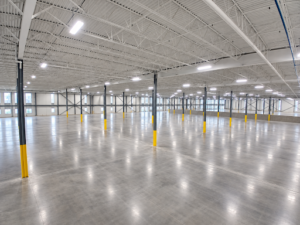
Polished concrete is produced by mechanically grinding a concrete slab with progressively finer diamond tooling, then treating it with a chemical densifier that reacts with the concrete to harden the surface from within. The result ranges from a low-sheen industrial finish to a high-gloss, reflective surface. Because you are refining the existing slab rather than adding a covering, polished concrete reduces dusting and is easy to clean. Industrial Floor Systems delivers this through its concrete polishing services and can strengthen weaker slabs further with concrete hardening and dustproofing.
What is epoxy flooring?
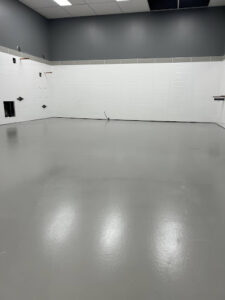
Epoxy flooring is a high-performance system created by applying multiple layers of epoxy resin to a prepared concrete floor. Once cured, it forms a hard, seamless, non-porous coating that bonds tightly to the slab and resists chemicals, stains, impact, and abrasion. Epoxy is widely used in manufacturing and food-processing environments because it seals the surface completely and can be built up in thickness for demanding traffic. Explore the options on the Industrial Floor Systems epoxy flooring page.
Not All Epoxy Flooring Systems Are the Same
“Epoxy flooring” can describe systems with very different thicknesses, resin formulations, aggregates and topcoats. A light-duty coating designed for pedestrian traffic should not be compared directly with a heavy-duty industrial system designed for forklifts, impact, or chemical exposure.
When comparing epoxy flooring options, consider the system’s thickness, substrate preparation, chemical resistance, impact requirements, slip resistance and expected traffic.
Polished Concrete vs Epoxy: At a Glance
The clearest way to compare the two systems is side by side. The table below summarizes how they differ across the factors facility managers weigh most often.
| Factor | Polished Concrete | Epoxy Flooring |
| Construction | Existing concrete slab is ground, densified, and polished | Resin coating installed over prepared concrete |
| Durability | Excellent abrasion resistance on a sound slab | High durability when the correct system is specified |
| Chemical resistance | Moderate; some chemicals can stain or etch concrete | Generally high, depending on the resin system |
| Moisture sensitivity | Less dependent on coating adhesion | Moisture testing is important before installation |
| Forklift traffic | Excellent when slab is suitable | Excellent when system thickness and specification match traffic |
| Slip resistance | Can be treated or mechanically textured | Anti-slip aggregate can be incorporated |
| Appearance | Natural concrete, matte to high gloss | Wide range of colours, finishes and decorative options |
| Maintenance | Routine cleaning and periodic maintenance | Routine cleaning plus eventual recoating |
| Repairs | Cracks and damaged areas can be repaired and re-polished | Damaged areas can be patched and recoated |
| Downtime | No coating cure period | Requires curing between system stages and before heavy use |
| Best suited to | Warehouses, distribution centres, retail and showrooms | Manufacturing, food processing, chemical and washdown environments |
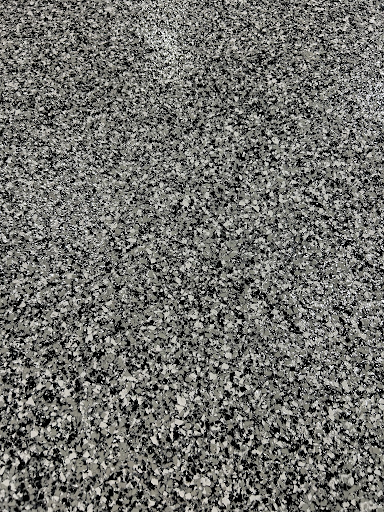
Decorative epoxy systems can also provide a more customized finish, with a range of colours, textures, and decorative options to suit commercial and industrial spaces.
Polished Concrete vs Epoxy: 10 Key Differences
- How the Flooring Is Constructed
Polished concrete is a concrete floor. The existing slab is mechanically ground, treated, and polished to improve its hardness, appearance, and performance.Epoxy is a coating over the concrete. The concrete remains the substrate, while the epoxy system becomes the finished wearing surface.This distinction affects everything from moisture sensitivity to repairs and long-term maintenance.
- Durability and Abrasion Resistance
Both flooring systems can perform extremely well in commercial and industrial environments when properly specified.Polished concrete has an advantage in high-abrasion environments because the finished surface is part of the concrete slab itself. There is no separate coating film to wear away or delaminate.
Epoxy can also provide excellent durability, particularly when a heavy-duty system is selected. However, the system must match the demands of the facility.
For example, a warehouse with frequent forklift turning and braking may require a more robust epoxy system than a lightly trafficked commercial area.
The important question isn’t simply “Is epoxy durable?” It’s “What flooring system has been specified for the actual traffic and operating conditions?”
- Chemical and Stain Resistance
This is one area where epoxy generally has the advantage.
Concrete is porous by nature. Even after polishing and densification, certain chemicals can stain, etch, or otherwise affect the surface.
Epoxy creates a sealed resinous surface that generally provides much stronger resistance to oils, chemicals, and staining.
However, chemical resistance varies between flooring systems. If your facility regularly handles acids, solvents, oils, cleaning chemicals or other aggressive substances, the installer should know:
- The chemical involved
- Concentration
- Temperature
- Frequency of exposure
- Expected contact time
- Cleaning procedures
A generic “chemical-resistant epoxy” label is not enough to determine whether a particular system is suitable.
- Slip Resistance
Neither polished concrete nor epoxy is automatically slip-resistant.A highly polished surface can become slippery when contaminated with water, oil, or other liquids. Epoxy can also become slippery when wet if it is installed without an appropriate slip-resistant texture. Slip resistance should be treated as a specification decision. Depending on the application, a flooring system may incorporate:
- Anti-slip aggregate
- Textured finishes
- Mechanical surface treatments
- Appropriate drainage
- Cleaning and maintenance procedures
The right level of slip resistance depends on how the floor will actually be used.
- Moisture
Moisture is an important consideration when installing any flooring system, but it is particularly important for bonded coatings such as epoxy. Excess moisture moving through a concrete slab can interfere with adhesion and contribute to problems such as blistering or delamination.
Polished concrete is less dependent on a coating-to-concrete bond because there is no separate resin film. However, moisture can still affect the slab, appearance, and certain treatments.
The condition of the slab should therefore be assessed before either system is selected.
Proper surface preparation and appropriate moisture testing can help identify potential problems before installation.
- Maintenance
Both systems are relatively easy to maintain compared with many traditional flooring options.
Polished concrete typically requires routine cleaning, such as dust-mopping and wet cleaning, with periodic maintenance or re-polishing depending on traffic.
Epoxy is also straightforward to clean because its seamless surface does not have grout joints or exposed pores. However, areas subject to heavy traffic, turning, impact, or chemical exposure may eventually require repairs or recoating.
- Repairs and Cracking
The existing slab needs to be considered before choosing either option. Cracks, joints, contamination, surface deterioration, and structural issues can affect the performance and appearance of the finished floor.
Polished concrete can be repaired and re-polished, but repaired areas may remain visually noticeable.
Epoxy can also be repaired by treating damaged areas and rebuilding the coating system. However, cracks or movement in the underlying concrete can potentially telegraph through a coating.
Neither system should be used to hide an unresolved structural concrete problem.A professional assessment should identify significant cracks, joints, and damaged areas before installation.
- Appearance and Customization
Polished concrete provides a natural concrete appearance and can range from matte to highly reflective.The final appearance can depend on the existing concrete, aggregate exposure, colour variation, and level of polishing.
Epoxy provides more opportunities for customization. Depending on the system, it can incorporate:
- Custom colours
- Decorative flakes
- Colour zoning
- Safety markings
- High-gloss finishes
- Textured finishes
- Anti-slip aggregate
For facilities that need designated pedestrian routes, safety zones, or branded commercial areas, epoxy may offer more flexibility.
- Installation and Operational Downtime
Downtime can be just as important as installation cost for an operating facility.
Polished concrete involves mechanical grinding and polishing rather than waiting for a resin coating to cure. Depending on the project, this can make it easier to return areas to service without the extended curing requirements associated with some coating systems.
Epoxy installation typically involves several stages, including surface preparation, primer or base layers, and curing between applications. The floor may also need additional time before it can accept heavy traffic.
Actual installation time depends on:
- Floor area
- Existing slab condition
- Required repairs
- System specification
- Environmental conditions
- Number of coats
- Required cure times
- Facility operating schedule
For a busy warehouse or manufacturing plant, the installation plan should therefore be discussed before the flooring system is selected.
- Cost and Long-Term Value
There is no universal answer to the question of whether polished concrete or epoxy is cheaper.
The initial price can be influenced by:
- Square footage
- Slab condition
- Surface preparation
- Repairs
- Required finish
- Epoxy system thickness
- Decorative options
- Moisture mitigation
- Chemical resistance requirements
- Traffic levels
Polished concrete can be cost-effective when the existing slab is sound and suitable for polishing because the concrete itself becomes the finished floor.
Epoxy may provide better value when the facility needs a sealed, chemical-resistant or highly customized surface.
The more useful question is therefore:
What will the flooring cost over its expected service life, including maintenance, repairs, recoating and operational downtime?
A lower initial installation price does not necessarily mean lower long-term cost.
Polished Concrete vs Epoxy: Which Should You Choose?
The simplest way to approach the decision is to start with your operating conditions.
- Choose polished concrete when you have a sound concrete slab, heavy traffic, limited chemical exposure, and a preference for a durable, low-maintenance natural finish.
- Choose epoxy when chemical resistance, stain resistance, hygiene, colour coding, washdown or a fully sealed surface is a priority.
- Get a professional assessment of when moisture, cracking, contamination, heavy impact, or mixed operating conditions could affect the performance of the flooring system.
There is also no rule that says an entire facility has to use exactly the same flooring system. Different zones may have different requirements.
| Polished concrete refines and hardens the existing slab for a low-maintenance, abrasion-resistant floor, while epoxy adds a bonded resin coating that seals the surface and delivers stronger chemical resistance. The best choice depends on slab condition, moisture, chemical exposure, and appearance goals rather than a single “better” option. |
Checklist: questions to ask before choosing polished concrete or epoxy
- What is the condition, age, and moisture level of the existing slab?
- What chemicals, oils, or cleaning agents will contact the floor?
- What type and volume of traffic (foot, forklift, pallet jack) is expected?
- Do you need slip resistance, colour coding, or a specific appearance?
- How much downtime can operations tolerate during installation?
Frequently asked questions
| Is polished concrete cheaper than epoxy flooring?
Costs vary by slab condition, finish level, and area, so neither is universally cheaper. Polished concrete can be economical when the existing slab is sound because it uses the concrete you already have. A site assessment is the only reliable way to compare pricing. |
| Can epoxy be applied over polished concrete?
It is not ideal. A polished, densified surface is very smooth, which reduces the profile epoxy needs to bond. If a change is planned, the surface should be re-profiled through proper preparation first. |
| Which floor is better for a warehouse?
Both work. Polished concrete suits high-traffic warehouses with limited chemical exposure, while epoxy is preferred where chemical resistance, colour zoning, or a fully sealed surface matters. |
| Which is more slip-resistant?
Both can be slippery when wet. Epoxy readily accepts anti-slip aggregate, and polished concrete can receive an anti-slip treatment, so slip resistance is a specification choice rather than a fixed property. |
| Can polished concrete be repaired?
Yes. Damaged areas can be repaired, and the surrounding surface can be re-polished. However, repairs may remain somewhat visible, particularly where the original slab has significant variation in colour or aggregate. |
| Does epoxy flooring need maintenance?
Yes. Epoxy is easy to clean, but it isn’t maintenance-free. Heavy traffic, impacts, chemicals, and wear can eventually damage the coating. Depending on the system and operating conditions, individual areas may need repair or the floor may eventually require recoating. |
Ready to Compare Flooring Options for Your Facility?
Industrial Floor Systems has installed polished concrete and epoxy flooring systems for commercial and industrial facilities across Canada for more than 20 years. As an ISNetworld member, we understand the contractor compliance, safety, and qualification requirements that many industrial facilities, manufacturers, and project owners expect from their flooring contractors.
We can assess your existing slab, traffic requirements, moisture conditions, chemical exposure, and operating needs to help determine the most appropriate flooring system for your facility.Request a quote and find out whether polished concrete, epoxy, or another flooring system is right for your facility.